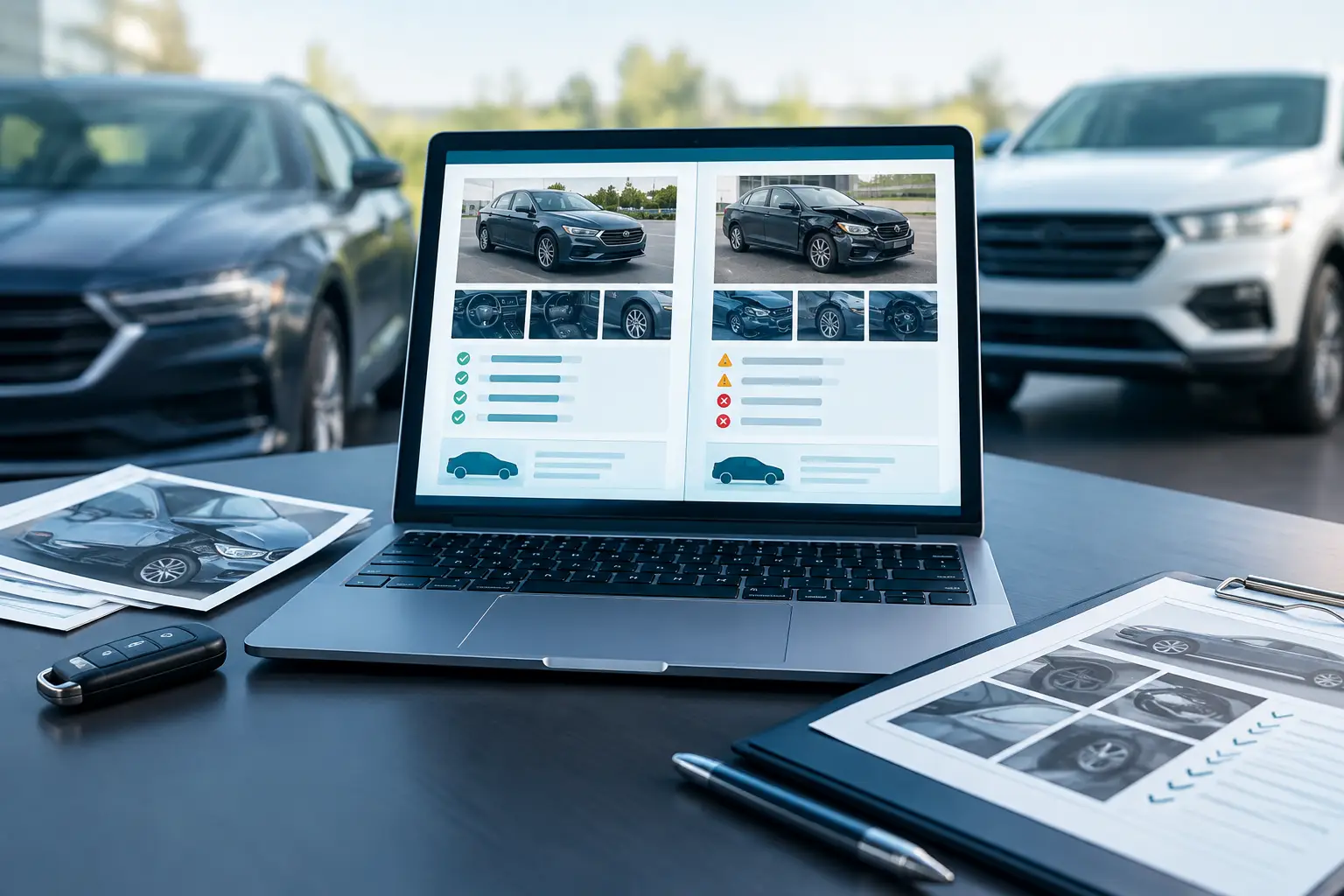

A vehicle can look like a margin opportunity on the lane and become a costly surprise after reconditioning, title review, or a customer complaint. That is why the best dealer appraisal software does more than return a trade value. It gives your team the evidence to decide what a vehicle is worth, what it may cost to retail, and whether it belongs in your inventory at all.
For independent dealers, acquisition managers, and auction buyers, speed matters. But speed without verification creates expensive mistakes. A useful appraisal platform turns VIN-level facts, condition inputs, market signals, and operational rules into a decision your team can explain and defend.
What dealer appraisal software should actually solve
An appraisal is not one number. It is a chain of decisions: identify the exact vehicle, confirm its history, estimate market demand, account for condition and recon, then set a buy figure that protects target gross. Software that only supplies a book value leaves most of that work to memory, spreadsheets, and judgment calls that vary from one appraiser to another.
The right system should reduce that variation without pretending every vehicle is identical. A clean, low-mileage local trade with two keys is not priced the same as an accident vehicle with open recalls, a branded title, or an uncertain odometer reading. Good software makes those differences visible before the deal is written.
The practical goal is straightforward: create a repeatable acquisition process that helps your team buy confidently, document why it bought, and avoid carrying hidden risk into inventory.
Core features of the best dealer appraisal software
VIN decoding and verified vehicle history
Start with identity. The platform should accurately decode the VIN and surface the specifications that materially affect value: trim, drivetrain, engine, transmission, factory equipment, model year, and body style. A valuation built on the wrong trim or configuration is wrong before the appraisal begins.
History data is equally important. Accident and damage records, title status and brands, theft and recovery information, ownership events, odometer readings, recalls, and registration history can change both wholesale desirability and retail exposure. The system should show the underlying facts clearly, not bury major red flags behind a generic label.
Data coverage is not a promise that every event will appear for every vehicle. Dealers should treat a report as verified evidence from available sources, then pair it with a physical inspection, title review, and auction announcement review. Software supports judgment. It does not replace it.
Market-based valuation with usable context
A single estimated value is helpful only when your team understands what it represents. Look for retail, trade, and wholesale-oriented market context where available, along with comparable listings, local demand indicators, price movement, and days-on-market signals.
The key question is not, “What is this car worth nationally?” It is, “What can we buy it for, recon it for, and sell it for in our market within an acceptable time?” A dealer in Phoenix may have a different answer than a dealer in Minneapolis, especially for trucks, EVs, luxury vehicles, and seasonal inventory.
The strongest tools let users adjust for mileage, condition, options, and location while preserving the assumptions behind the number. If the system produces a figure nobody can audit, it can create false confidence rather than better appraisals.
Condition, recon, and risk inputs
Market data alone does not protect margin. A platform should give appraisers a fast way to record tire depth, cosmetic damage, mechanical concerns, warning lights, key count, glass damage, service needs, and expected recon costs.
This is where workflow design matters. If entering condition information takes too long, teams will skip it during busy trade evaluations. If the process is too vague, one appraiser may call a vehicle “average” while another flags $2,000 in needed work. Structured condition fields and consistent recon categories create cleaner decisions over time.
Risk should be visible alongside price. A vehicle with a favorable acquisition number can still be a poor buy if its title history, odometer pattern, accident severity, or recall status adds uncertainty that your store is not prepared to absorb.
Team workflows and auditability
Dealer software has to work across roles. A salesperson may initiate a trade appraisal, a used-car manager may approve the number, a buyer may compare auction units, and an inventory manager may need the final record for merchandising or compliance.
Choose a platform that supports saved appraisals, notes, attachments, approval steps, user permissions, and exportable records. These features are not administrative extras. They protect the dealership when a number is questioned later and help managers coach teams using real appraisal data.
A system should also make it easy to compare several VINs side by side. This is especially valuable for auction buying, where the decision is often not whether a vehicle is good in isolation, but whether it is the best risk-adjusted buy among five similar units.
How to evaluate appraisal platforms before you commit
Start with your actual acquisition workflow, not a feature checklist. A one-rooftop independent store may need fast VIN research, transparent risk signals, and exportable reports. A high-volume group may place more weight on integrations, permissions, centralized policies, and reporting across locations.
Ask vendors to demonstrate a real appraisal from start to finish. Use a VIN with known history, unusual equipment, or a title concern. Then measure how many screens it takes to find the facts that would change your buy number. A polished dashboard means little if the team cannot identify a branded title, inconsistent mileage, or open recall quickly.
Also test how the valuation behaves when inputs change. Can an appraiser record above-average mileage, add a recon estimate, and see the rationale behind the recommended figure? Can a manager distinguish a market adjustment from a history-related risk factor? Transparency matters because your team must be able to explain the number to a customer and to one another.
Integration requirements deserve a hard look. If your appraisal tool needs to feed a DMS, CRM, inventory system, desking process, or merchandising workflow, confirm what data moves automatically and what requires manual re-entry. A disconnected tool can still be valuable for acquisition intelligence, but the labor cost should be clear before rollout.
Avoid the common buying mistakes
The first mistake is treating valuation as the whole appraisal. Market price is only one layer. A low acquisition price may reflect a history problem, title issue, reconditioning burden, or weak local demand.
The second is buying a platform based on the largest claimed dataset rather than the clearest decision workflow. More data is useful only when appraisers can locate, interpret, and act on it without slowing the lane or trade desk.
The third is ignoring the cost of inconsistency. When every buyer uses different sources, condition standards, and assumptions, the dealership cannot see why some units outperform others. Standardized appraisal records create a feedback loop between acquisition, recon, sales velocity, and realized gross.
Finally, do not assume every vehicle should be retailed. Better software helps teams recognize when to pass, wholesale, or send a unit to another channel. Saying no to a risky vehicle is often the most profitable decision of the day.
A practical scorecard for choosing a platform
When comparing providers, assess them against the decisions your team makes daily. The platform should deliver reliable VIN identification and history evidence, explain its market valuation logic, capture condition and recon inputs, support multiple users, preserve an audit trail, and fit your existing operating systems.
It should also fit your buying volume. A buyer evaluating dozens of auction vehicles needs rapid comparison and sorting. A dealership focused on trades may prioritize a customer-facing appraisal experience and manager approvals. Fleet operators may need repeatable inspections, bulk VIN review, and lifecycle reporting.
DriveEvidence is built around this evidence-first approach, combining VIN-based records with a 0-100 DriveEvidence Score and a dashboard for comparing, sorting, saving, and exporting multiple vehicles. A score is most useful when it speeds up triage while leaving the verified details available for the final buying decision.
Put proof ahead of the purchase order
The best appraisal process does not eliminate judgment. It makes judgment more consistent, faster to verify, and easier to defend. Give every appraiser the same view of identity, history, market context, condition, and cost before a number reaches the customer.
When a vehicle raises a question, the software should help your team find the proof quickly. When the evidence is incomplete or the risk exceeds your store's appetite, walking away is not a missed deal. It is margin protection.